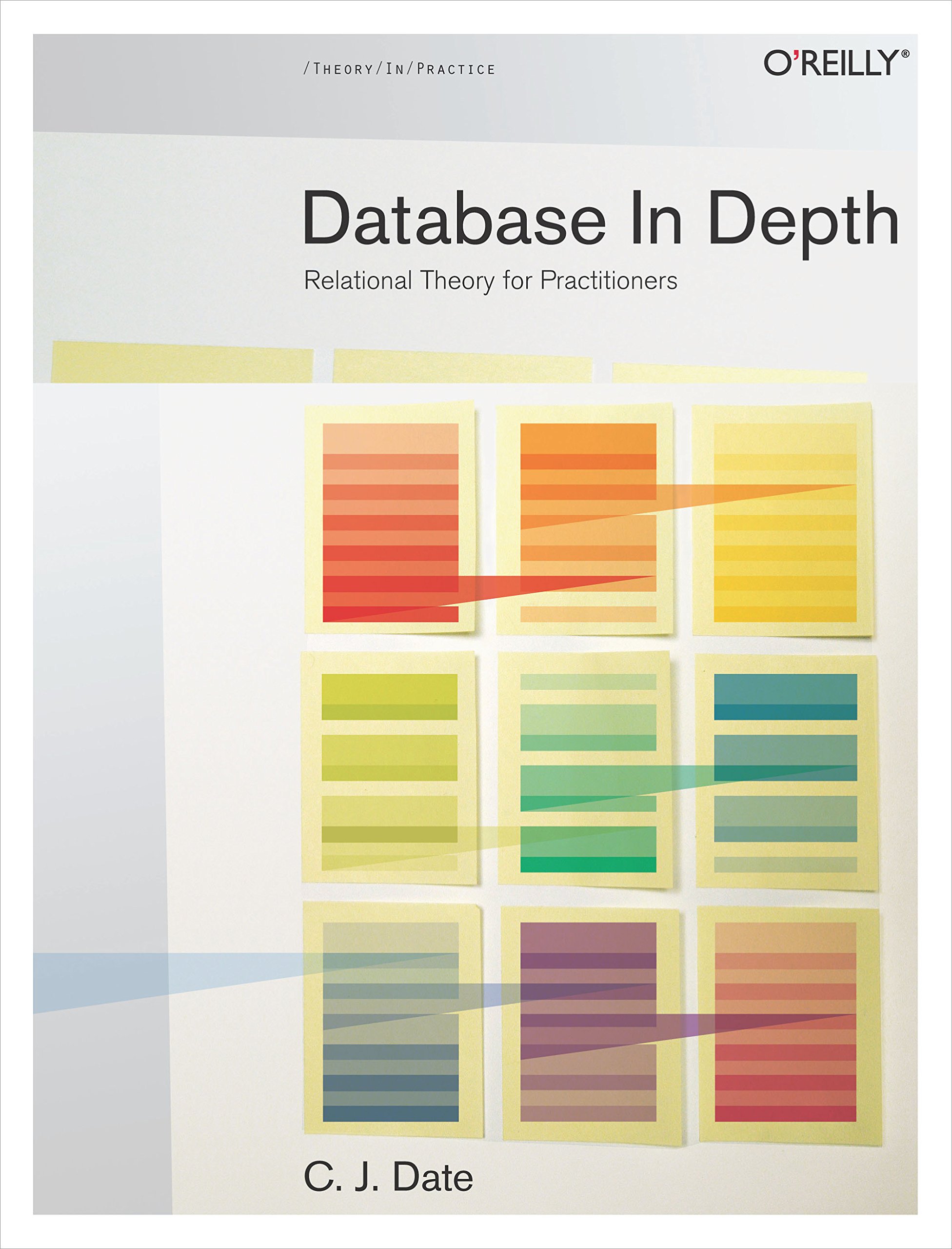
Database in Depth: Relational Theory for Practitioners
ISBN: 9780596100124
Found in 2 comments on Hacker News
We may earn a commission from purchases made through links on this page.
Not ready yet? Get weekly book picks.
paddy_m
· 2013-11-11
·
Original thread
I think you should learn the relational model (not SQL). Understand the problems it was trying to solve and how the relational model solves them. Then figure out how that applies to your app. Database in Depth was helpful for me http://www.amazon.com/Database-Depth-Relational-Theory-Pract... .
Get the best books from Hacker News each week
Join 4,500+ subscribers and get the best books mentioned on Hacker News every Thursday.

I am not sure how the author has missed the copious amount of material that Date (& Darwin) wrote on this topic? The obvious one being the Third Manifesto (whole book available here [1] since it's out of print now). But even "Database in Depth" [2] has extensive discussion about this despite being a less "opinionated" and "ranty" book (highly recommended BTW)
Yes, not explicitly updated since 2014, but there's really nothing new to say since then?
Date is definitely concerned about the departures from the relational model in SQL. But it's (EDIT) not just about purism. He's also pretty in general peaved off at SQL for similar concerns that the author presents here about syntax and expressiveness. Third Manifesto's "tutorial D" mandates the addition of a richer type system, including higher level types that match on relation constraints, and "operators" (similar to OO methods) on those types; basically a kind of predicate dispatch.
I imagine he's pretty sick of being ignored.
[1] https://www.dcs.warwick.ac.uk/~hugh/TTM/DTATRM.pdf
[2] https://www.oreilly.com/library/view/database-in-depth/05961...