Nobody knows, because we don't know how to do it yet. There could be a "big breakthrough" tomorrow that more or less finishes it out, or it could take 100 years, or - worst case - Penrose turns out to be right and it's not possible at all.
Also, are there useful books, courses or papers that go into general AI research?
Of course there are. See:
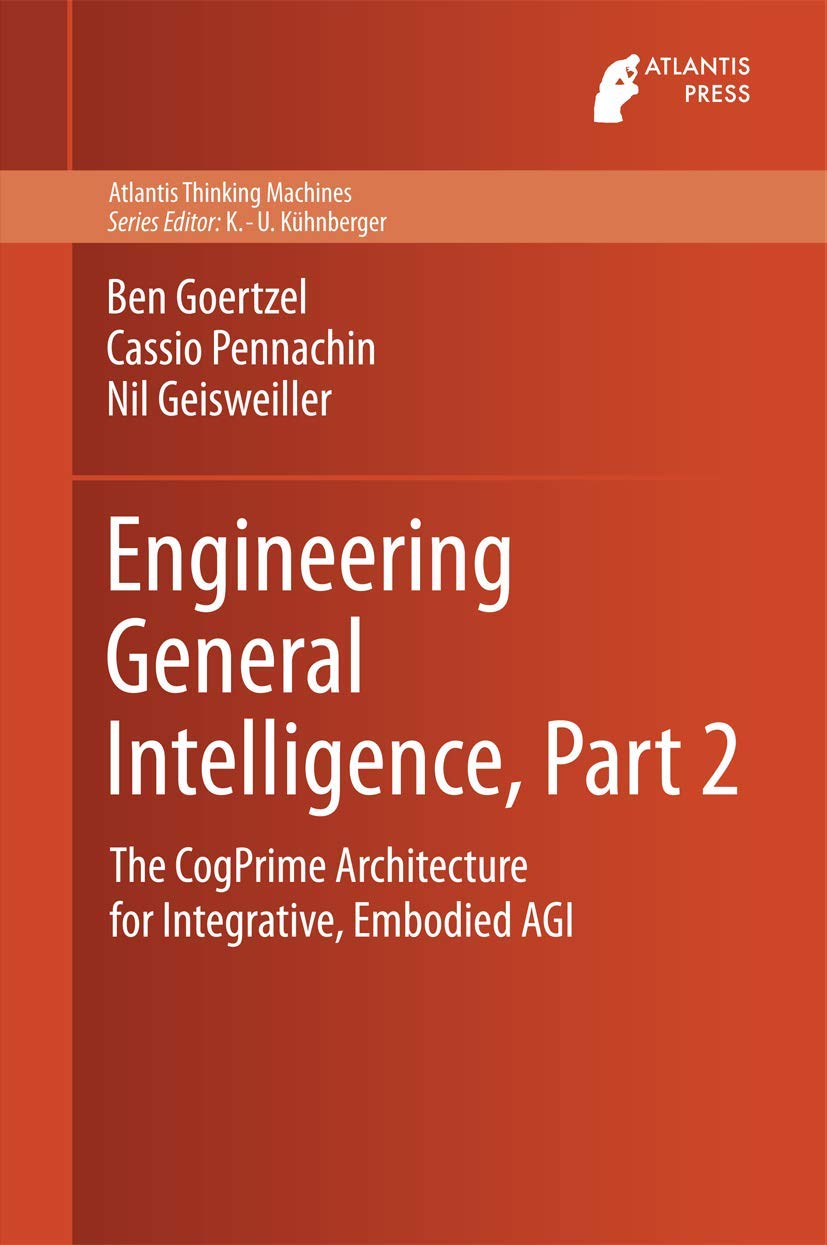
https://www.amazon.com/Engineering-General-Intelligence-Part...
https://www.amazon.com/Engineering-General-Intelligence-Part...
https://www.amazon.com/Artificial-General-Intelligence-Cogni...
https://www.amazon.com/Universal-Artificial-Intelligence-Alg...
https://www.amazon.com/How-Create-Mind-Thought-Revealed/dp/0...
https://www.amazon.com/Intelligence-Understanding-Creation-I...
https://www.amazon.com/Society-Mind-Marvin-Minsky/dp/0671657...
https://www.amazon.com/Unified-Theories-Cognition-William-Le...
https://www.amazon.com/Master-Algorithm-Ultimate-Learning-Ma...
https://www.amazon.com/Singularity-Near-Humans-Transcend-Bio...
https://www.amazon.com/Emotion-Machine-Commonsense-Artificia...
https://www.amazon.com/Physical-Universe-Oxford-Cognitive-Ar...
See also, the work on various "Cognitive Architectures", including SOAR, ACT-R, CLARION, etc,
https://en.wikipedia.org/wiki/Cognitive_architecture
"Neuvoevolution"
https://en.wikipedia.org/wiki/Neuroevolution
and "Biologically Inspired Computing"
https://en.wikipedia.org/wiki/Biologically_inspired_computin...
Get the best books from Hacker News each week
Join 4,500+ subscribers and get the best books mentioned on Hacker News every Thursday.

On the more hands-on front, all I really did was download the source for the various components of OpenCog[4], build them, and get all of that stuff installed. The plan for the next little while is to start playing around with building simple systems with OpenCog and SOAR[5] and gain a deeper understanding of both.
So yeah, wish I had something more exciting to talk about, but that's just where things are for me right now.
[1]: https://www.amazon.com/gp/product/0262122960/
[2]: https://www.amazon.com/Engineering-General-Intelligence-Part...
[3]: https://www.amazon.com/Words-Rules-Ingredients-Language-Scie...
[4]: https://opencog.org/
[5]: https://soar.eecs.umich.edu/