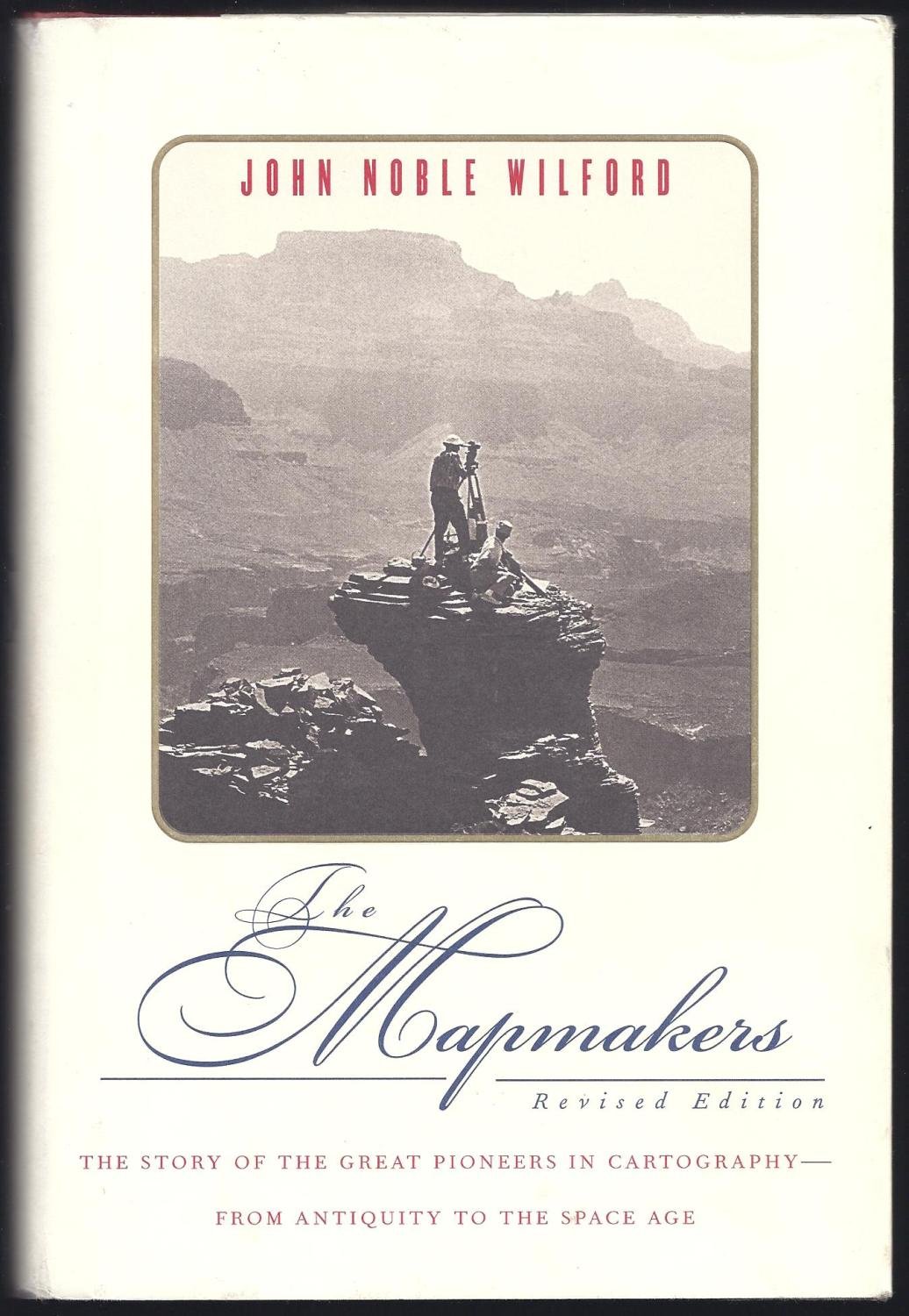
The Mapmakers, Revised Edition
ISBN: 0375409297
Found in 1 comment on Hacker News
We may earn a commission from purchases made through links on this page.
Not ready yet? Get weekly book picks.
Get the best books from Hacker News each week
Join 4,500+ subscribers and get the best books mentioned on Hacker News every Thursday.

Incidentally I am currently mid-way through 'The Mapmakers' (http://www.amazon.com/Mapmakers-Revised-John-Noble-Wilford/d...), love maps, collect maps, donate maps to UT Austin's great online Perry-Castañeda Library Map Collection (http://www.lib.utexas.edu/maps/), and generally find geography fascinating. Martin Dodge's http://cybergeography.org/ is also a great resource.
In terms of Human Computer Interaction (HCI) theory, humans have the greatest 'bandwidth' in perceiving spatially (visually). This means that as we grow to deal with ever larger quantities of information, in ever more complex systems, we will find ourselves more often utilizing spatial reasoning ... whether we like it or not. The history of mapmaking and maps in general is a fascinating area of human endeavour that can inform us moving forward.